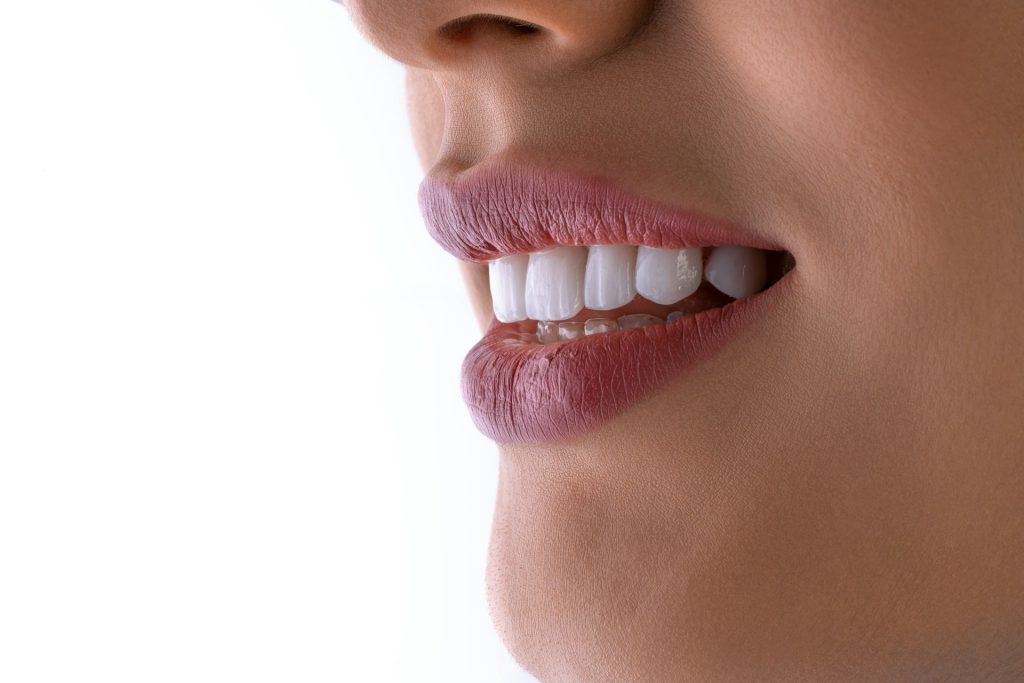
Veneers in Cancun typically cost $350 to $700 per tooth, against $1,200 to $2,500 per tooth in the United States. A set of eight runs roughly $2,800 to $5,600 there versus $10,000 to $20,000 at home, and the work is usually finished in one trip of five to seven days.
The worry people bring to this is not really about money. It is that cheap veneers will look like veneers: too white, too uniform, too obviously bought. That is a legitimate fear and it has a specific cause, which is worth understanding before you book anything. Veneers look fake when the shade is chosen from a chart instead of your face, when every tooth is milled the same length, and when nobody did a trial before the enamel came off. Those are process failures, not price failures, and you can screen for them.
What veneers cost in Cancun
Typical published prices for 2026. Most Riviera Maya clinics quote per tooth and discount slightly for a full set.
| Type | Cancun, per tooth | US, per tooth | Set of 8, Cancun | Set of 8, US |
|---|---|---|---|---|
| E.max / lithium disilicate porcelain | $400 – $700 | $1,500 – $2,500 | $3,200 – $5,600 | $12,000 – $20,000 |
| Feldspathic porcelain, hand layered | $500 – $800 | $1,800 – $3,000 | $4,000 – $6,400 | $14,000 – $24,000 |
| Zirconia | $400 – $600 | $1,200 – $2,000 | $3,200 – $4,800 | $9,600 – $16,000 |
| Composite, chairside | $150 – $300 | $400 – $1,200 | $1,200 – $2,400 | $3,200 – $9,600 |
| No-prep ultra-thin | $500 – $900 | $1,500 – $2,500 | $4,000 – $7,200 | $12,000 – $20,000 |
Most people do eight to ten upper teeth, because that is what shows in a wide smile. Six looks obviously bounded when you laugh. Ask the dentist how many teeth show in your own smile rather than picking a number off a package. For the full procedure list see our Cancun dental price list, and our veneers in Cancun page covers the treatment itself.
The week, day by day
Veneers are the best case in dental tourism for a single trip, because there is no healing period to wait out. A typical Cancun schedule looks like this.
| Day | What happens |
|---|---|
| Before you fly | Send photos; discuss shade, shape, and how many teeth; agree a written quote |
| Day 1 | Exam, x-rays, digital scan, photographs; smile design mockup created |
| Day 2 | Trial smile: a temporary mockup bonded over your teeth so you can see the shape before anything is cut |
| Day 3 | Preparation, final scan, temporaries fitted. Lab begins milling |
| Days 4 to 5 | Free. Lab work in progress |
| Day 6 | Try-in without cement; check shade and shape in daylight; adjustments made |
| Day 7 | Final bonding, bite check, polish |
Do not book a flight home for the evening of the bonding day. Leave a buffer day. If one veneer needs reshaping or the bite feels off, you want to be able to walk back in rather than live with it for a decade.
Why veneers look fake, and how to prevent it
This is the part that actually determines whether you are happy, and none of it is about the country.
Insist on a trial smile. This is the single most important safeguard. A mockup is bonded temporarily over your unprepared teeth so you can see the proposed length, width, and shape in your own face, in daylight, before any enamel is removed. If you hate it, it comes off and nothing is lost. A clinic that wants to skip this step and go straight to preparation is removing your only chance to change your mind.
Choose shade in natural light, next to your face. The classic mistake is picking the brightest shade on the chart under clinic lighting. Bring a photo of yourself smiling from a few years ago. Shade should relate to your eye whites and skin tone, not to a chart.
Ask for variation. Real teeth are not identical. Central incisors are longer than laterals, edges are slightly translucent, and there is a subtle curve following the lower lip. Uniform rectangles of one flat colour is what “veneer look” actually means.
Ask how much enamel comes off. Conventional veneers need a small amount of preparation, typically around half a millimetre. That is irreversible. Ask for the number, and ask whether a no-prep or minimal-prep option suits your case.
Ask to see the lab’s own cases. Not stock marketing photos. Real before-and-afters from that clinic, ideally on people with a similar starting point to yours.
When veneers are the wrong answer
A good dentist will sometimes tell you not to do this, and that is a signal worth paying for. Veneers are a cosmetic solution to a cosmetic problem. They are the wrong tool when:
- Your teeth are healthy and only slightly crooked. Clear aligners move your own teeth and remove no enamel. Slower, but nothing irreversible happens.
- Discolouration is the only issue. Whitening is cheaper, reversible, and takes an afternoon.
- You grind your teeth and have no plan for it. Porcelain fractures under grinding forces. If you are not going to wear a night guard, expect breakages.
- There is untreated decay or gum disease. Veneers bonded over an unhealthy foundation fail. Treat the problem first.
- The teeth are heavily damaged. At a certain point a crown is the right restoration, not a veneer.
If a clinic says yes to veneers for every single case that walks in, that tells you what kind of practice it is. Clinics that decline unsuitable cases are the ones we want to work with, and a willingness to say no is part of how we vet clinics.
Frequently asked questions
How long do porcelain veneers last?
Well-made porcelain veneers commonly last ten to fifteen years, and many go longer. What ends them early is grinding, trauma, or decay at the margin, not age. Composite veneers are a shorter proposition, typically five to seven years, and they stain more.
Does it hurt?
Preparation is done under local anaesthetic and is not painful. Some sensitivity to hot and cold is normal for a few weeks while you are in temporaries and shortly after bonding. Persistent pain is not normal and should be looked at.
Can I do it in fewer than seven days?
Some clinics with in-house milling can compress it to three or four days. The tradeoff is the trial smile and the try-in, which are the two steps that protect you from an outcome you dislike. Compressing is a real option, but know what you are trading.
Will veneers from Mexico be whiter than my other teeth?
They can be, and that mismatch is one of the main reasons veneers look obvious. If you are only doing your upper teeth, either match the veneers to your lowers or whiten the lowers first and then match. Discuss the sequence before you start, because veneers themselves do not whiten later.
What if one chips after I get home?
A single chipped veneer can often be smoothed or repaired locally. A replacement generally means going back, because the lab has your shade and case file. Ask what the warranty covers and what voids it before you pay, and see our guide on what happens if dental work fails after you fly home.
Get a veneer quote with the shade plan included
Send us a photo of your smile and tell us roughly what you are hoping to change. We will get you written quotes from vetted clinics that specify the material, how many teeth, whether a trial smile is included, and the warranty terms. That last set of details is what separates a good outcome from an expensive regret.
Free and no obligation. Message us on WhatsApp or use our contact form.
Some clinics may compensate us for referrals; this never changes your price or our published vetting standards. Prices shown are typical published prices and change over time. Nothing here is medical advice or a promise of a specific outcome.