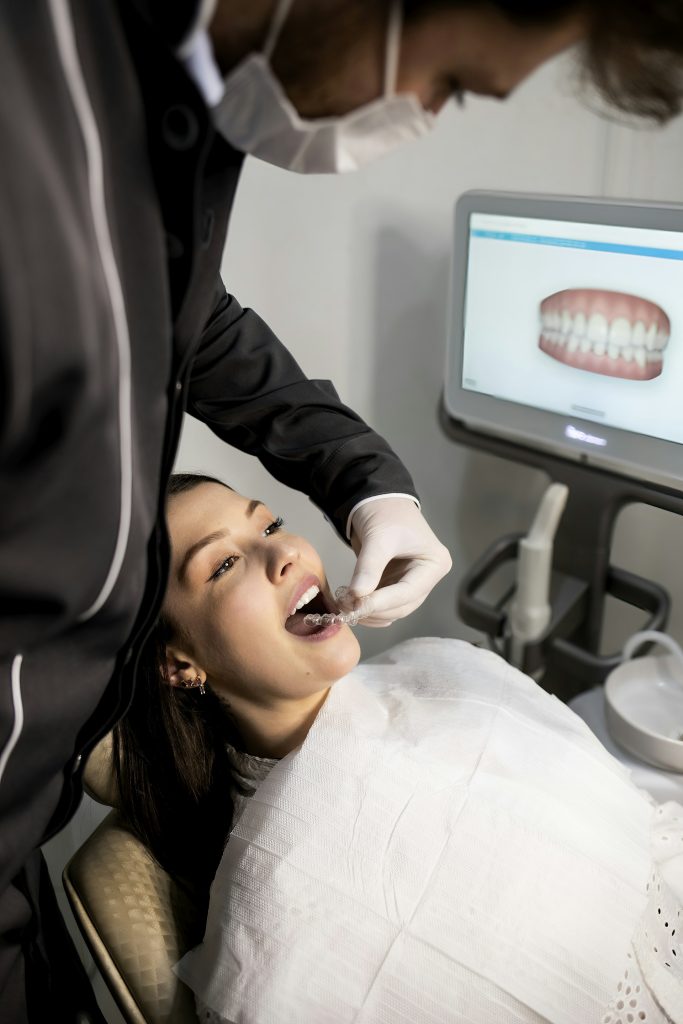
A single dental implant in Cancun, complete with the abutment and the crown on top, typically costs $1,200 to $1,900. The same tooth in the United States runs $3,500 to $6,000. And it takes two trips about four to six months apart, because bone needs that long to fuse to titanium and nothing accelerates it.
That second sentence is the one that surprises people, so it is worth stating plainly up front. Anyone advertising a finished permanent implant in a single week is either talking about a temporary crown, or is doing something outside the normal protocol that you should ask hard questions about. The waiting is not inefficiency. It is the part that makes the implant work.
What a single implant costs, and what should be in the price
An implant is three separate components, and the cheapest quotes usually price one or two of them and mention the rest later. Typical published 2026 prices:
| Component | What it is | Cancun | United States |
|---|---|---|---|
| Implant fixture | The titanium post placed in the jaw | $700 – $1,100 | $1,800 – $3,000 |
| Abutment | The connector between post and crown | $150 – $350 | $400 – $900 |
| Crown | The visible tooth | $400 – $700 | $1,200 – $2,500 |
| All three together | $1,200 – $1,900 | $3,500 – $6,000 | |
| CBCT scan | 3D imaging for planning | $80 – $200, often included | $250 – $500 |
| Bone graft, if needed | Rebuilding bone volume | $300 – $900 | $800 – $3,000 |
| Sinus lift, if needed | For upper back teeth | $700 – $1,500 | $1,500 – $5,000 |
| Extraction, if needed | Removing the failing tooth | $80 – $200 | $200 – $600 |
When you compare two quotes, check that both include the abutment and the crown. A $900 “implant” that turns into $1,700 once those are added is not dishonest, but it is not comparable either. Our Cancun dental price list covers the other procedures.
The two-trip timeline
Here is what actually happens, and when. The gap in the middle is osseointegration, the process of bone growing into the microscopic surface of the titanium.
| Stage | What happens | Time |
|---|---|---|
| Before you fly | Send a panoramic x-ray or CBCT; receive a written plan and quote | 1 to 2 weeks |
| Trip 1, day 1 | Exam, CBCT, treatment plan confirmed | Half a day |
| Trip 1, day 2 | Extraction if needed, implant placed, sometimes a bone graft at the same time | 1 to 2 hours in the chair |
| Trip 1, days 3 to 5 | Check-up, suture care, post-op review before you fly | Short visits |
| At home | Osseointegration. A temporary tooth if the gap shows | 3 to 6 months, longer with a graft |
| Trip 2, day 1 | Check integration, uncover the implant, place healing abutment | Short visit |
| Trip 2, days 2 to 3 | Scan or impression for the crown, lab work | |
| Trip 2, day 4 or 5 | Abutment and final crown fitted, bite adjusted | Short visit |
Total time on the ground is roughly 4 to 6 days per trip. If you need a bone graft before the implant can go in, that adds a stage and sometimes a third trip. A good clinic will tell you that from the CBCT before you book anything.
Immediate loading, and when it is legitimate
Some cases genuinely allow a temporary crown on the same day the implant goes in. This is called immediate loading, and it is real dentistry, not marketing. It depends on achieving enough initial stability in the bone at placement, which the surgeon measures.
Two things to understand. First, the same-day tooth is a temporary, and it is deliberately kept out of heavy bite contact while the bone integrates. The permanent crown still waits for integration. Second, immediate loading is not appropriate for everyone, and a surgeon who offers it to every patient regardless of bone quality is making a marketing decision rather than a clinical one.
If the front of your mouth is involved and you cannot walk around with a gap, ask about a temporary. Just be clear with yourself about what you are being promised: a placeholder, not a finished tooth.
Implant brands, and why it matters more than you think
Every implant system uses medical-grade titanium and every reputable one works. The reason to care about the brand is not metallurgy. It is parts availability in ten years.
Implant components are proprietary. The abutment that fits a Straumann implant does not fit a lesser-known system. If your crown comes loose in 2038 and you are living in Ohio, a dentist who can identify the system and order the correct screwdriver and replacement abutment can fix it in an afternoon. If the system was a small regional brand that no longer exists, your options narrow considerably.
Straumann, Nobel Biocare, Zimmer, Dentsply, and Neodent are among the systems with wide international distribution. Cancun clinics commonly stock these alongside cheaper options. Ask which system, get the answer in writing, and take the lot numbers home with you.
A cheaper implant system is not automatically a bad decision. Just make it deliberately, knowing the tradeoff, rather than by default because nobody told you there was one.
What to ask before you book
- Does the quote include the fixture, the abutment, and the crown?
- Which implant brand and model, and will I get the lot numbers?
- Will I need a bone graft or sinus lift, based on my CBCT, and what does that cost if it turns out to be needed during surgery?
- Who performs the surgery, what is their specialty, and can I verify their license?
- Is the CBCT included, and is the surgery guided?
- What is the warranty on the implant and separately on the crown, and what voids it?
- What happens if the implant does not integrate? Who pays for the replacement, and for the travel?
That last question is the one that separates clinics. Failure to integrate is uncommon but it happens, and a clinic that has a clear written answer has thought about it. We require that answer in writing before we refer anyone, which is part of how we vet clinics, and our guide to what happens if dental work fails after you fly home covers the wider picture.
Frequently asked questions
How painful is it?
Less than most people expect. The placement itself is done under local anaesthetic, with sedation available, and is not painful. Expect soreness and swelling for two to four days afterward, manageable with over-the-counter painkillers for most people. A tooth extraction on the same day makes it more uncomfortable than the implant alone.
How long do implants last?
Long-term studies of well-placed implants report survival rates above 90 percent at ten years, and many last decades. The crown on top is the wear item and may need replacing before the implant does. Smoking and uncontrolled diabetes are the main things that shorten the odds.
Can I fly home right after surgery?
Most surgeons want you seen once more before you leave, so plan a couple of days. Cabin pressure is not generally a problem for a healed surgical site, but swelling peaks around 48 to 72 hours, which is not when you want to be in an airport. See our guide on planning a Mexico dental vacation for how to schedule around it.
What if I do not have enough bone?
Very common, especially if the tooth has been missing for years, and very treatable. A graft rebuilds volume and typically needs three to six months to mature before the implant goes in. This is exactly why the CBCT matters before you book flights, so nobody discovers it on the day.
Is one implant worth flying for?
On pure arithmetic, marginally. You save perhaps $2,500 to $4,000 and spend $1,500 to $3,000 on two trips. It becomes clearly worth it at two or more implants, or when you are combining it with other work. Be honest with yourself about the total including flights.
Get an implant quote that lists every component
Send us your panoramic x-ray or CBCT and we will get you written quotes from vetted clinics listing the implant brand, whether the abutment and crown are included, whether grafting is anticipated, the timeline, and the warranty terms.
Free and no obligation. Message us on WhatsApp or use our contact form. If you are missing most of your teeth, see our All-on-4 in Cancun guide instead.
Some clinics may compensate us for referrals; this never changes your price or our published vetting standards. Prices shown are typical published prices and change over time. Nothing here is medical advice or a promise of a specific outcome.